

If you are standing in the foam roller aisle of a sporting goods store, or scrolling past forty of them on Amazon, the choice comes down to two names more often than any other: TriggerPoint and ProsourceFit. One is a 13-inch extra-firm multi-density roller. The other is a plain foam cylinder that costs considerably less. The short answer is that TriggerPoint wins on texture and on how precisely you can work a spot, and ProsourceFit wins on price and on being perfectly adequate if you only want something to lean on.
I am 64, I have osteoarthritis in my right knee, and my lower back locks up most mornings before I have finished my coffee. I bought the TriggerPoint Grid in May 2025 after my physical therapist had me try rolling during six weeks of sessions that spring. I have used it most evenings since, about a few minutes at a time. I have never owned the ProsourceFit. I compared it the way most people do now, by reading its listing, its specs and a long stretch of its reviews, and by knowing exactly what a plain foam cylinder feels like, because that is what the clinic had. So take this as one careful shopper's comparison, not a lab test.
| TriggerPoint Grid | ProsourceFit Foam Roller | |
|---|---|---|
| Surface | Three-dimensional multi-density GRID surface with varying ridges and nodules | Smooth, uniform foam surface |
| Firmness | Extra firm, with softer zones built into the pattern | Medium foam, softer overall, more give under weight |
| Size and weight | 13 inches long, 1.1 pounds, roughly 5 inches across | Longer and thicker cylinders available in several lengths |
| Pressure control | Distrodensity Zones let you shift between tighter and softer areas of the same roller | One consistent density, so pressure comes only from how much body weight you put on it |
| Getting on and off the floor | Short 13-inch length is easy to clear, but the firm foam is unforgiving if you drop onto it | Longer roller is more stable to sit on, and softer foam is friendlier to bony hips |
| Durability | Holds shape well under repeated use, does not hollow out in the middle | Soft foam can dent and break down sooner with heavy daily use |
| Learning curve | Ridges take a few sessions to get used to, especially on the sides of the hips | Almost none. You lie on it and roll |
| Price | Costs more | Costs less |
| Best for | Someone with specific tight spots who wants control over pressure | Someone who wants one inexpensive tool for general loosening |
What You Actually Get With the TriggerPoint Grid
The Grid is 13 inches long, about 5 inches across, and weighs 1.1 pounds. That is short. Short enough that it takes up almost no space beside the couch, which matters if your living room is already the living room and not a gym. The foam is described as extra firm, and that is honest. It does not sink away from you.
The first week I used it, I kept it on the floor beside my recliner and rolled my calves for three or four minutes before the evening news, sitting on a yoga mat with my hands braced behind me. That is the whole routine. No plan, no schedule, no particular form. The 13-inch length means I move the roller under one calf, then the other, and then switch legs, rather than sliding my whole body along a long cylinder the way you do with the big rollers at a gym. It is less athletic than it looks on the videos, which suited me fine.
The part that separates it from a plain cylinder is the surface. TriggerPoint calls it a multi-density GRID, with a three-dimensional pattern of ridges and nodules they call Distrodensity Zones. In plain English: some parts of the roller push harder than others, and you can roll until a tight section of your back or thigh lands on the softer zone instead of the hard ridge. That sounds like marketing. It is not. When I first started, the ridges on the sides of my hips felt like a small, insistent thumb. Not painful, exactly. Insistent. After a couple of weeks I started hunting for that feeling, because it was reaching things the clinic's smooth roller never touched.
The foam does not hollow out. After about eighteen months of most-evening use, my Grid still has its shape and its surface. There is no flat worn spot where my mid-back always lands. I cannot say the same for the soft rollers I used at the clinic, which had visible dents after a few months of shared use.
If your tight spots have tight spots, this is the roller that reaches them
Extra firm, multi-density surface, 13 inches long, 1.1 pounds. The one my physical therapist had me try and the one that stayed in my living room.
Amazon Check Today's Price on Amazon →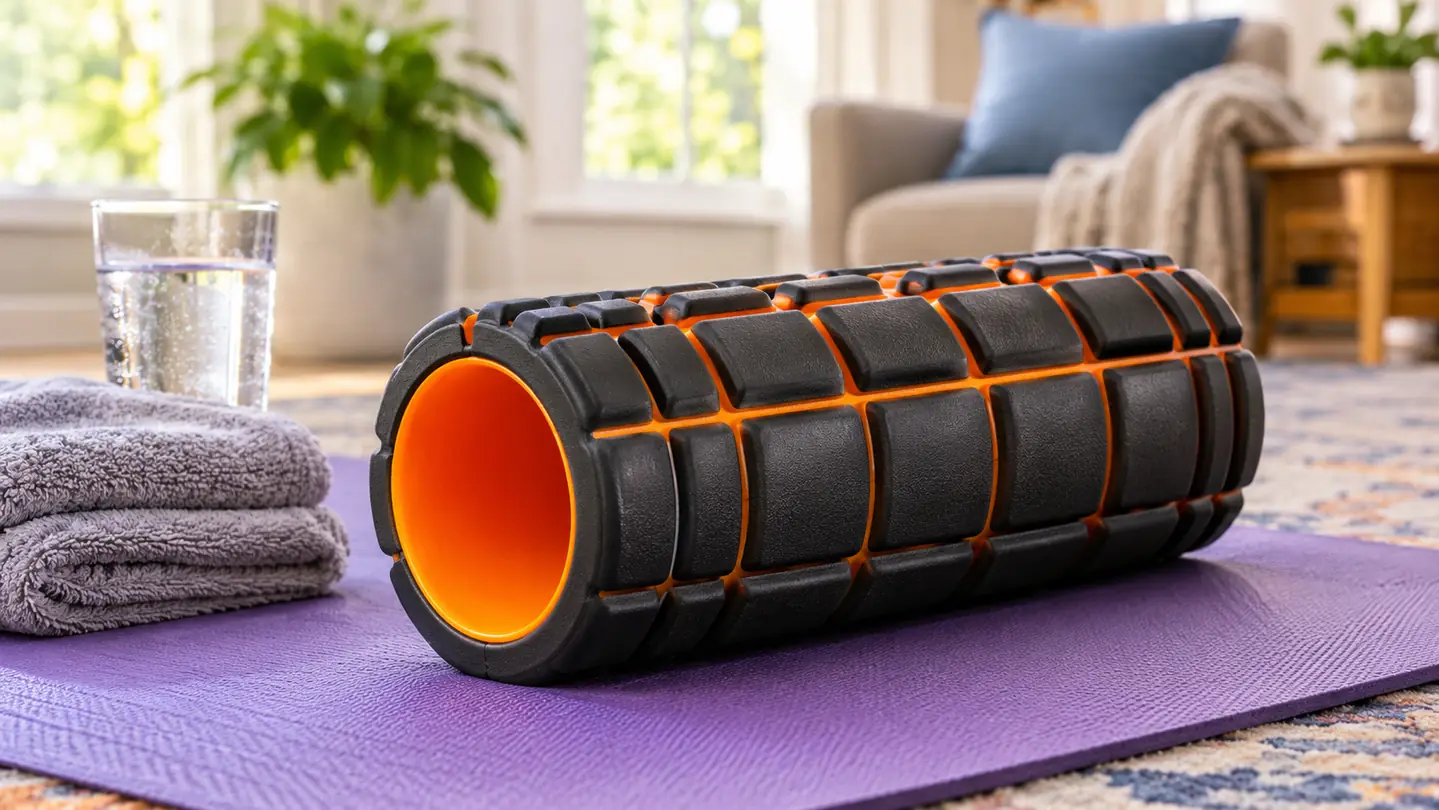
Where the TriggerPoint Grid Wins
It wins on targeting. A smooth roller is a blunt instrument. You put your weight on it and it presses on everything in a band across your body. The Grid's ridges and nodules let you find one spot and work it, which is the whole reason a person rolls in the first place. My upper back, between the shoulder blades, is the clearest case. On a smooth roller I could never get enough pressure there without contorting. With the Grid, I stand sideways against the wall in the hallway, lean back until the ridge catches, and I can work that spot for thirty seconds and feel it let go.
Last October I spent a Saturday afternoon cutting back the tomato plants and hauling the wire cages out to the shed, and by five o'clock my lower back had that familiar band of tightness across it. I did not reach for the heating pad first, which for me is unusual. I lay on the mat and worked the ridge along the muscles on either side of my spine, never on the spine itself, maybe four minutes a side, and then got up and finished making supper. It did not undo the afternoon. It took enough of the edge off that I could stand at the stove without shifting my weight every thirty seconds.
It also wins on build. The extra-firm foam holds its shape, and the multi-density pattern means you are not fighting the same uniform resistance everywhere. That combination is why it has stayed on my floor for a year and a half instead of getting shoved into a closet. And it wins on adjustability, which is the underrated one. On a bad day, I use the softer zone. On a day when my thighs feel like they belong to somebody else, I go looking for the ridge. One tool, two settings, no dials.
Where the ProsourceFit Wins
It wins on price, and I am not going to pretend that does not matter. If you are not sure you will keep up with rolling, spending less on the experiment is the sensible move. Rolling is one of those things people buy with real intentions in January and stop doing by March. The ProsourceFit lets you find out whether you are a person who rolls without putting much on the line.
It also wins on gentleness and on size. Smooth, medium foam gives more under your weight, which is a real advantage if your hips or ribs are bony, or if you are new enough to rolling that firm pressure makes you tense up instead of relax. I have been on both, and the clinic's soft roller was the reason I did not quit in the first week. The longer lengths are a genuine plus too: a longer roller is more stable to sit on and easier to balance across, and if you are working your upper back, the extra length means you are not constantly repositioning. A 13-inch roller asks a little more of your balance. That is not nothing at 64.
What I could not judge from the listing is how the foam holds up over a year. A number of the reviews mention it softening with heavy daily use, and a few mention dents that stay where a hip bone lands again and again. I have no way to check that myself, and I would not want you to take my word about it over the word of a few dozen people who actually own one. Read those reviews the way you would read a contractor's references. Look for the ones that say how long they have had it and what they weigh, not the ones written the day it arrived.
The clinic's soft roller was the reason I did not quit in the first week. The Grid was the reason I was still rolling six months later.

The Part Nobody Warns You About
Firmness cuts both ways. My first session on the Grid, I rolled the outside of my right thigh and stood up feeling like I had been in a minor argument. That is not a defect. It is what extra-firm foam does when you are not used to it. The fix is not to press harder. It is to put less of your body weight on the roller, go slower, and stop after a minute instead of grinding away for ten. If you are the kind of person who thinks more is better, and I am, a smooth medium roller will forgive you and the Grid will not.
Here is what that first session actually looked like. Mat on the living-room floor, roller crosswise under my right thigh, rolling slowly from just above the knee to just below the hip, maybe six passes. By the third pass I noticed I was holding my breath, which is the tell that you are pressing instead of rolling. My therapist's rule was simple and I will pass it along: if you cannot breathe normally and keep your jaw unclenched, you are working too hard. Back off, put some weight onto your forearms, and let the roller do the work.
The other thing to plan for is the floor. Getting down onto a yoga mat and back up again is its own event at our age. I use the arm of the couch, every time, and I do not apologize for it. If getting to the floor is a struggle, do what my therapist had me do first: roll standing up, with the roller against a wall, for your upper back and the sides of your hips. Save the floor for your calves and thighs on days when your knees are cooperating. And the standing rule I was given and have never broken: never roll directly on your lower spine, and never roll across the knee joint itself. Roll the muscles above and below. If you have a joint that has been replaced or a disc that has been named by a doctor, that is a conversation to have with them before you buy anything.
How I Would Decide
Ask yourself one question: do I have specific spots, or do I just want to loosen up? If you can put a finger on the place between your shoulder blades that complains after a morning at the kitchen counter, or the outside of a hip that aches after a walk, you want the TriggerPoint. The ridges are there to get at precisely that. If your honest answer is that you want something to lie on for a few minutes after gardening, and you are not sure yet whether the habit will stick, the ProsourceFit is the smarter first purchase.
One more practical note. Neither roller is a treatment. Nothing I have done with mine has changed the arthritis in my right knee, and I would be lying to you if I said otherwise. What rolling does for me is take the edge off the muscles that tighten up around a joint that is not moving the way it used to. My back feels less locked in the evening. My calves complain less on the walking loop with Ruth. That is a modest, real, repeatable thing, and modest real things are the only kind worth your money. Check with your doctor or physical therapist before you start, especially with a cranky back or a knee that has already been looked at.
Who Should Buy Which
Buy the TriggerPoint Grid if you are already rolling, or if your therapist has had you try it and you know you will keep at it. Buy it if you want one tool that can go gentle on a bad day and dig into a spot on a good one. Buy it if you have limited floor space, because 13 inches tucks behind a chair. Buy it if you have a specific, nameable tight spot you want to reach without buying three different rollers to find the right pressure.
Buy the ProsourceFit if you are brand new to rolling and want to test the habit before you invest. Buy it if you are bony through the hips or ribs and firm pressure makes you brace instead of relax. Buy it if you have trouble getting down to the floor, since a longer, softer roller is more forgiving to sit and balance on. Buy it if someone in the house will also use it and you would rather not be particular about it. Whichever way you go, keep it where you can see it, near the couch or beside the chair, because a roller in a closet is a roller you will not use.
The one that stayed on my living-room floor for eighteen months
Extra firm multi-density surface, 13 inches, 1.1 pounds. Today's price is on the listing, and the reviews are worth ten minutes of your time before you decide.
Amazon See the TriggerPoint Grid on Amazon →