
The first time my physical therapist handed me a foam roller, I thought she was joking. It was spring 2025, six weeks into the sessions she had me doing for a right knee that had been stiff and grumbly since my osteoarthritis diagnosis at 59, and she wanted me to lie on the floor and roll around on a piece of foam. I had spent 31 years as a school cafeteria manager on a tile floor, lifting stock pots and milk crates, and my idea of recovery was sitting down with a cup of coffee. Lying on the floor in front of a stranger did not sound like recovery. It sounded like a good way to need help getting back up.
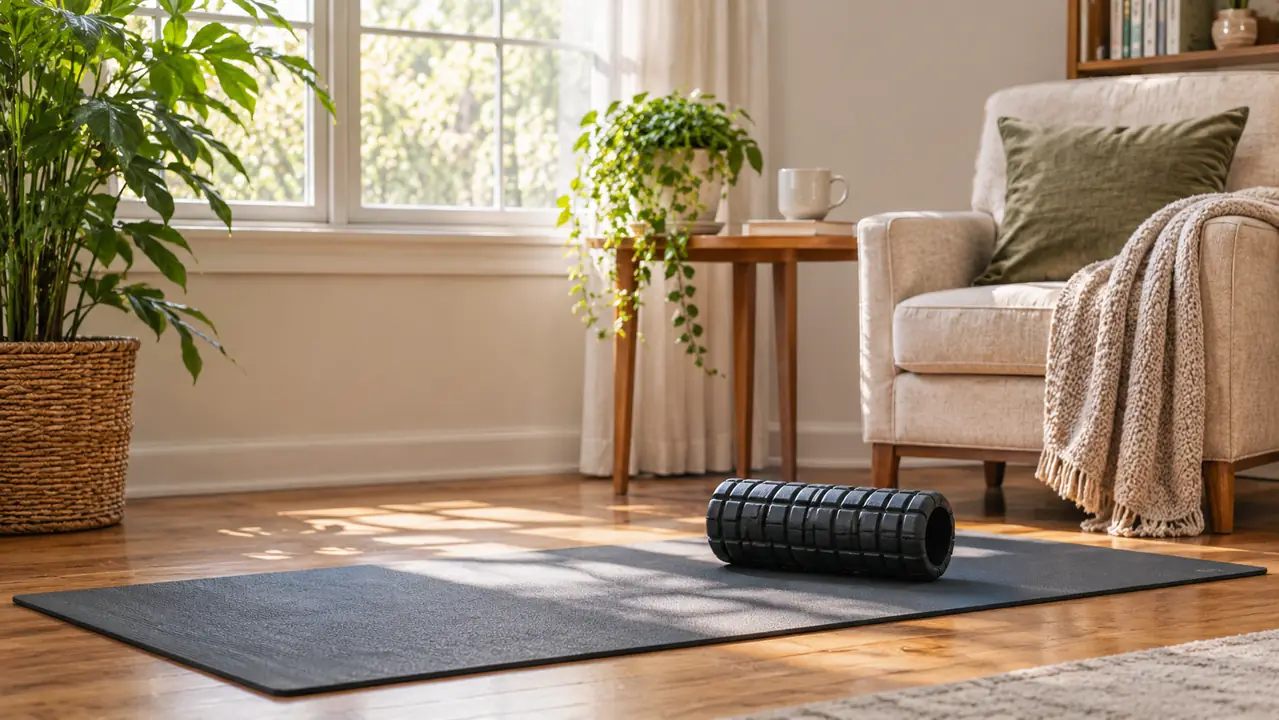
I bought my own TriggerPoint Grid in May 2025, about two weeks after that appointment, and I have used it most evenings since. That is roughly 18 months of steady, unglamorous use. It lives on a yoga mat beside the arm of the couch in the living room, because the couch arm is what I hold on to when I get back up. I am 64. I am not training for anything. What I wanted was to stop groaning when I stand up from the kitchen chair and to stop bracing myself on the banister on the way up to bed. This review is about whether the TriggerPoint Grid helped with that, what an extra firm roller feels like on a body that is not 25 anymore, and where it still frustrates me.
The Quick Verdict
An extra firm 13 inch roller that does one job well: it gets into the tight spots in my upper back and calves without me having to think hard about it. Not comfortable, not a cure for anything, and not something to use on a sore knee joint.
Amazon Check Today's Price →The roller my physical therapist pointed me toward, 18 months ago
Extra firm foam, 13 inches, multi-density GRID surface with ridges and raised nodules. I use mine for a few minutes most evenings, mostly standing against a wall. Talk to your own doctor or physical therapist before you start.
Amazon Check Today's Price on Amazon →How I've Used It for the Last 18 Months
My routine is not impressive. A few minutes, most evenings, after supper and before the news. I roll my upper back standing up with the roller against the living room wall, because getting down on the floor twice in one night is more than my knees want. Then I sit on the yoga mat and work on my calves and the outside of my right thigh, and I use the arm of the couch to get back on my feet. On garden days I do it before my shower, while my legs are still warm. On days when the knee is flaring I skip it entirely and sit with the heating pad instead. Nothing about this is disciplined. It is just what fit into my day and stayed.
The first two weeks were rough, and I want to be honest about that because the reviews I read before buying did not prepare me. Extra firm means extra firm. The first time I put my weight on it with my calf, I made a noise that brought Gus in from the kitchen to check on me. What changed was pressure, not bravery. Once I stopped trying to mash my whole body weight into the foam and let my hands and arms carry some of the load, it went from something I dreaded to something I look forward to. That took maybe ten days and a fair amount of trial and error.
What I noticed after about a month was not dramatic. I am not going to tell you it fixed anything, because it did not and nothing has. What I noticed was that the tight band across my upper back, the one that shows up after a morning of pulling weeds in the raised beds, loosened up faster than it used to. Before, that tightness would hang on for two or three days. Now it is usually a day, sometimes less. Melissa noticed before I did. She said I had stopped making a face when I get up off the floor after playing with Lily.
What the Grid Surface Actually Feels Like
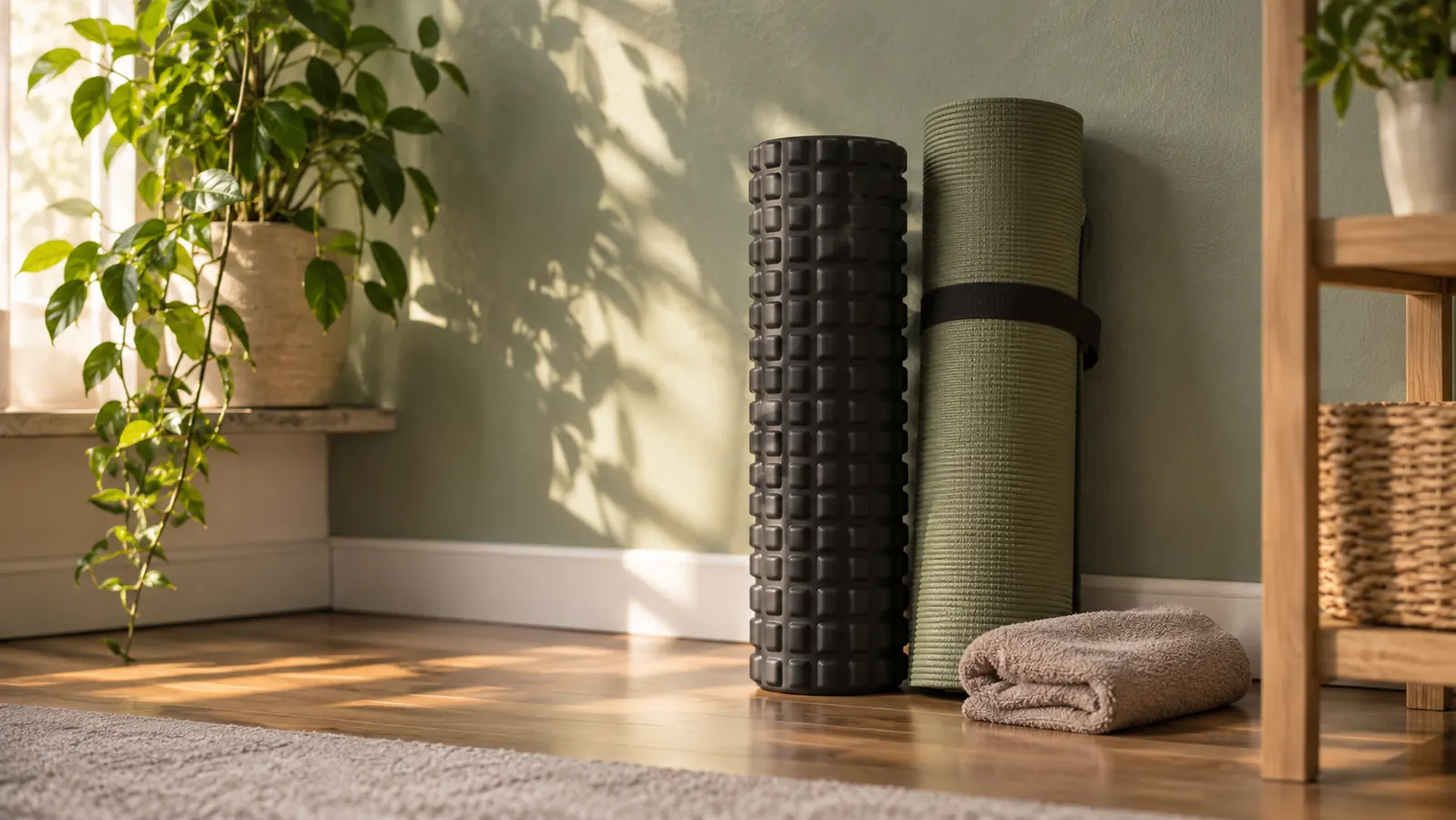
The part of this roller that matters is the surface. It is not a smooth tube. The TriggerPoint Grid has a pattern of ridges and raised nodules across the foam, and the listing calls that pattern Distrodensity Zones, which is marketing language for a real thing: the surface is uneven on purpose. Under my upper back, the lower areas spread the pressure out and the raised parts dig in a little. That combination is the reason I kept using it. The smooth roller I tried in the PT office felt like a rolling pin, one long push with no texture to it. This one feels closer to a thumb working along the muscle.
It is also firm, and the listing describes the firmness as extra firm, which is accurate. The foam does not give much under my weight. That is exactly what you want if the goal is to get into a tight muscle, and exactly what you do not want if you are sore to the touch. There were evenings early on when my back was too raw for it and I used a folded towel on the floor instead. That is not a failure of the roller. It is simply what an extra firm surface does on a bad day.
The 13 inch length is right for what I do. It is short enough to sit sideways across the mat and move around without fighting it, and long enough that I am not chasing a muscle with a tiny nub. It weighs about a pound, so carrying it between rooms is nothing. The whole thing is one piece of foam with no moving parts, which after a few years of battery powered gadgets in this house is a relief. There is nothing to charge and nothing to lose.
The Upper Back, Standing Against a Wall
I do not roll on the floor for my back. The physical therapist was clear about that with me, and my doctor repeated it: not directly on the lower spine. What I do instead is stand with my back to the living room wall, put the roller between my shoulder blades, and roll slowly up and down with my knees slightly bent, using my legs to move rather than my back. Two or three minutes. It is the best thing I have found for the tight spot that sits under my right shoulder blade after a morning of housework or a Sunday afternoon on the hard church pew.
Standing against the wall means I control the pressure with my legs, not with my whole body weight. That matters more than I expected. If it gets to be too much, I step away from the wall and the pressure drops immediately. On the floor with a smooth roller, you are committed. This way I can back off in half a second, and that is the difference between a useful minute and a sore week.
Gus tried it once, up against the door frame, and handed it back saying it was like being pummeled by a pool toy. He is 67 and has never had back trouble. I mention it because it is the honest reaction of someone who does not need the thing. If your back does not bother you, this roller will feel like pointless discomfort. If it does bother you, that same discomfort is doing something.
Calves, Thighs, and the Getting Up Problem
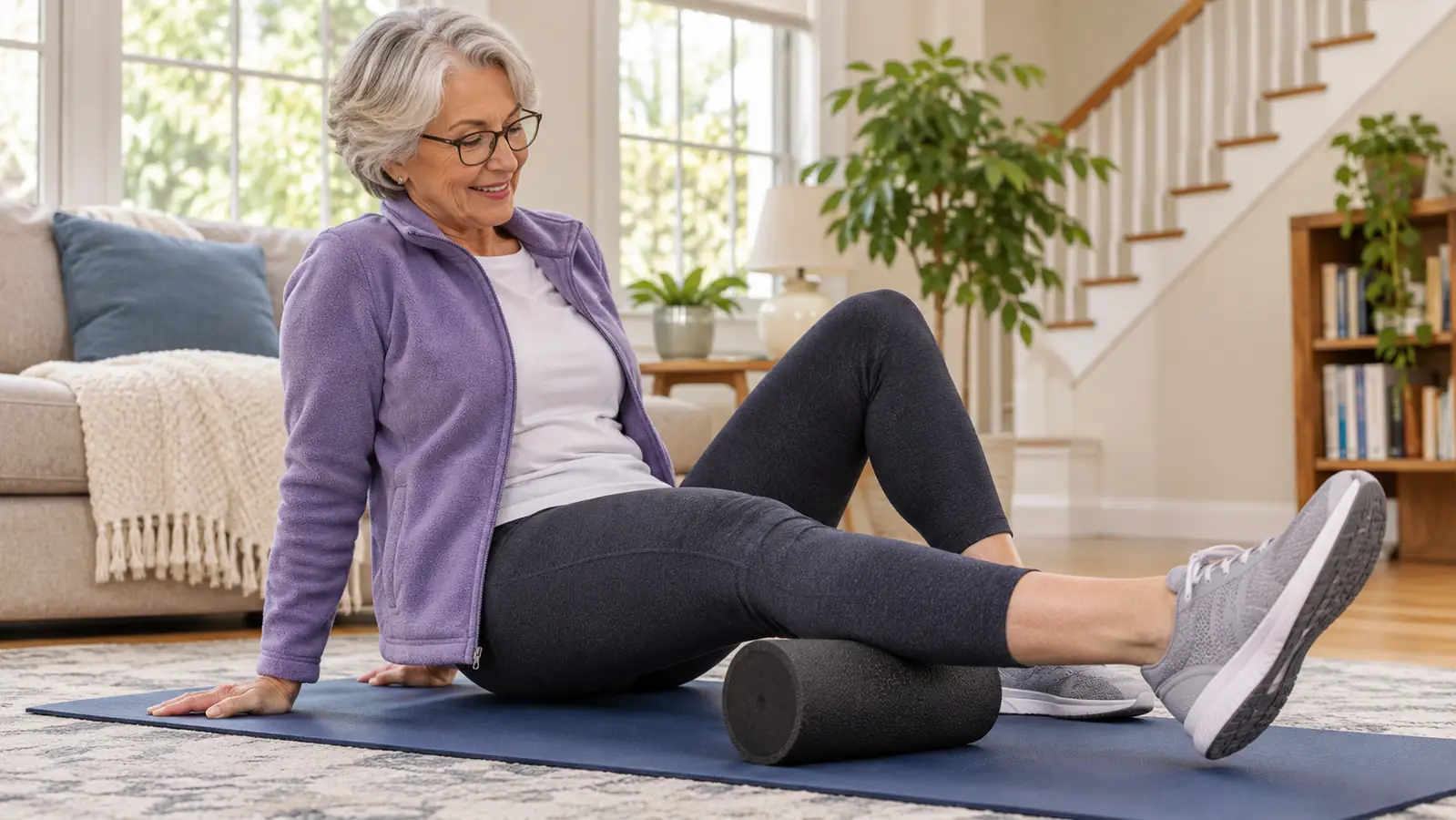
The sitting work is where this roller earns its spot in the living room. I sit on the yoga mat with one calf on the roller and the other foot on the floor, roll slowly from below the knee down toward the ankle, and then switch sides. My right leg is the tight one, always has been, even before the knee diagnosis, probably from years of standing with my weight shifted onto it while I ladled lunch onto trays. Two minutes on that calf takes the edge off in a way that stretching alone never did for me.
The outside of the thigh is the other spot. I lie on my side and work along the outer thigh, staying well above the knee joint, and it is not pleasant. I do not have a high tolerance for it and I will not pretend otherwise. But the next morning, walking the one mile loop with Ruth, my hip does not feel like it is pulling. That is the trade I make: two uncomfortable minutes at night for a better walk in the morning.
The getting up part deserves its own paragraph, because every review I read skipped it. When you are 64 with a cranky right knee, the hardest part of floor work is not the work. It is the floor. My setup is a yoga mat beside the couch, and I use the arm of the couch to push myself up. I keep the roller within arm's reach so I am not crawling after it. If getting down to the floor and back up is not safe for you, do the standing version against a wall and skip the rest. Ask your physical therapist which version fits what is going on with you.
What It Does Not Do
It does not fix a knee. I want to be plain about that, because there is a lot of nonsense written about foam rollers and joints. This is a piece of firm foam. It presses on muscle. My osteoarthritis is in the joint, and no amount of rolling changes that. What I roll is everything around the joint: the calf, the outer thigh, the upper back. That is the part I can influence, and it helped me move more comfortably through my ordinary days. It did not make the knee better, and I would be lying if I said it did.
It is also not comfortable, not effortless, and not fast. My first month I got maybe a small improvement for a fair amount of work. There is no timer, no heat, no vibration, nothing to distract you from the fact that you are pressing a hard object into a sore muscle. That is the entire product. If you want something that does the work for you while you watch television, this is not that thing.
What I Liked
- Extra firm foam has held its shape through 18 months of near nightly use
- The ridged, noduled surface reached my upper back in a way a smooth roller did not
- 13 inches and about a pound, easy to carry from room to room
- One piece of foam with nothing to charge and nothing to break
- Works standing against a wall, which matters when the floor is hard to get up from
Where It Falls Short
- Extra firm means genuinely uncomfortable at first, and too much on sore days
- The short length means you work one area at a time, not the whole back at once
- Technique matters more than the roller, and I got mine from my PT, not from the product
- Does nothing for the knee joint itself
- Not for use directly on the lower spine or on a joint
I do not roll my lower back or my knee. I roll everything around them, and that is the part that quietly made my mornings easier.
Who This Is For
This is for the person who has already been told by a doctor or a physical therapist that rolling is worth trying, and who wants one firm, simple tool to do it with. It suits someone with tight upper back muscles, tight calves, or an outer thigh that complains after a long walk. It suits someone willing to spend five minutes on the living room floor or against a wall most evenings, who understands the benefit shows up over weeks rather than in one session. If you are shopping for a parent in their sixties or seventies who complains about stiff mornings, this is a sensible, unshowy thing to put in their hands, ideally with a note to ask their doctor first.
Who Should Skip It
Skip it if you are looking for relief inside the joint. This does not go near a knee joint or a hip joint and it will not touch arthritis pain directly. Skip it if your muscles are sore to the touch, if you bruise easily, or if you have a condition where deep pressure is not advised, and check with your doctor before you start. Skip it if getting down on the floor and back up is not safe for you, unless you plan to do only the standing version against a wall. And skip it if you want something soft and forgiving to lie on. This is extra firm and it is meant to be.
Eighteen months in, it is still sitting beside the couch
Extra firm, 13 inches, multi-density GRID surface with ridges and raised nodules. A few minutes most evenings, standing at the wall or sitting on a mat. Ask your doctor or physical therapist whether rolling fits what is going on with you.
Amazon Check Today's Price on Amazon →