

Stiff is not the same thing as sore. It took me about five years to work that out. Sore is what my right knee feels like the afternoon after I spend two hours bent over the raised beds out back. Stiff is what my lower back feels like at 6:15 in the morning, before I have any business being vertical. I have osteoarthritis in that right knee, diagnosed when I was 59, and a lower back that has been cranky since the years I spent lifting stock pots and milk crates in a school cafeteria. Neither one is going away. Managing them is the job.
My physical therapist handed me a foam roller during the six weeks I spent with her in the spring of 2025. It was a TriggerPoint Grid, the 13 inch one, and I bought my own that May. I have rolled most evenings since, about 18 months now, and it has turned into the part of my routine that asks the least of me: a few minutes on the living room floor or against a hallway wall. This is not a cure and I will not tell you it is. Talk to your doctor or your physical therapist before you start, especially if you have a replaced joint or a back that has been imaged and diagnosed with something. But here is why the TriggerPoint roller earned its spot in my living room.
The roller my physical therapist handed me is the one still on my floor tonight
TriggerPoint Grid 1.0, 13 inches, extra firm, with the multi-density surface. Bought in May 2025, used most evenings since.
Amazon Check Today's Price on Amazon →It loosens the back of your legs before a walk, not after
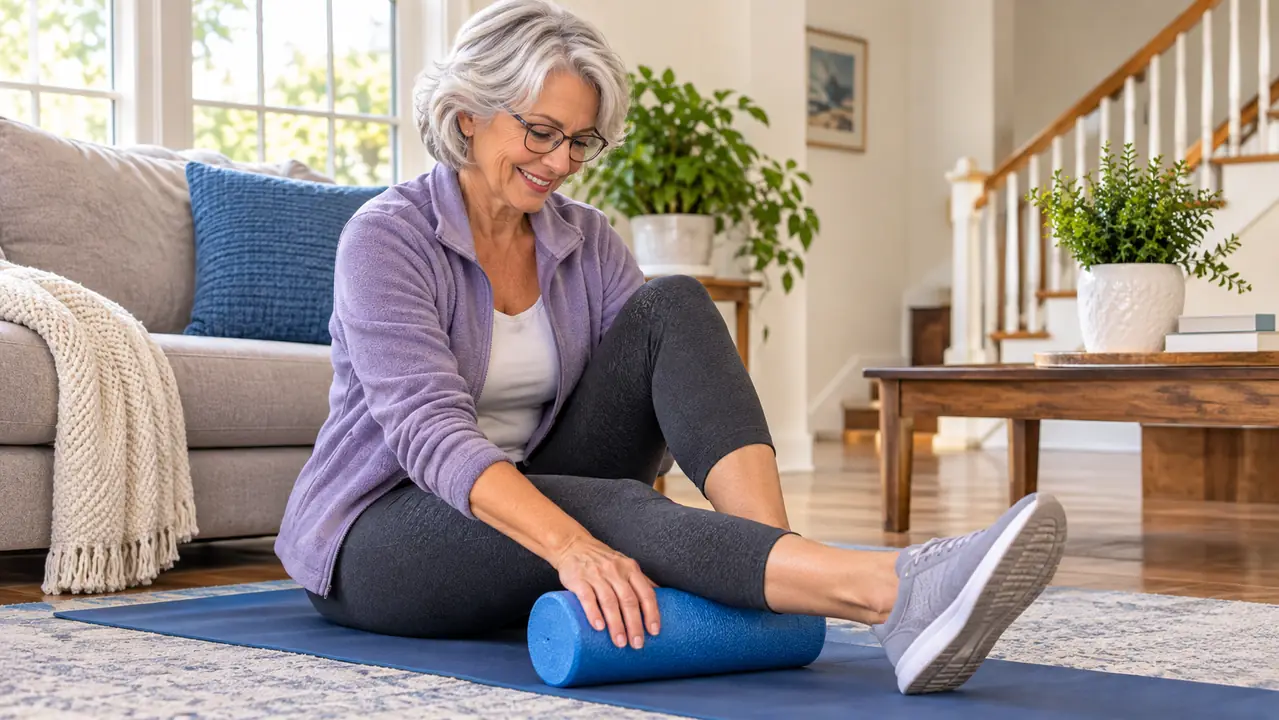
My morning loop with Ruth is one mile and it starts with a slight downhill, which my right knee hates when everything behind it is tight. So before I put my shoes on, I sit on the mat and roll the back of each calf and the outside of each thigh, maybe 45 seconds a side. That is the whole thing. The difference is not dramatic and I would not pretend otherwise. It is more that the first quarter mile stops feeling like a chore I have to get through. If you walk most mornings, this is the easiest place to start.
You can use it standing against a wall if the floor is a problem
Getting down onto a mat and back up again is its own workout at 64, and I have a couch arm I hold onto. But for my upper back I do not get on the floor at all. I stand with my back to the hallway wall, put the roller between my shoulder blades, and lean in, rolling slowly from the middle of my back up toward my shoulders. I never roll on my lower spine. That was a specific instruction from my PT and I have kept it. Standing work also means I can stop the second my knee says enough.
The surface is not one smooth tube of foam
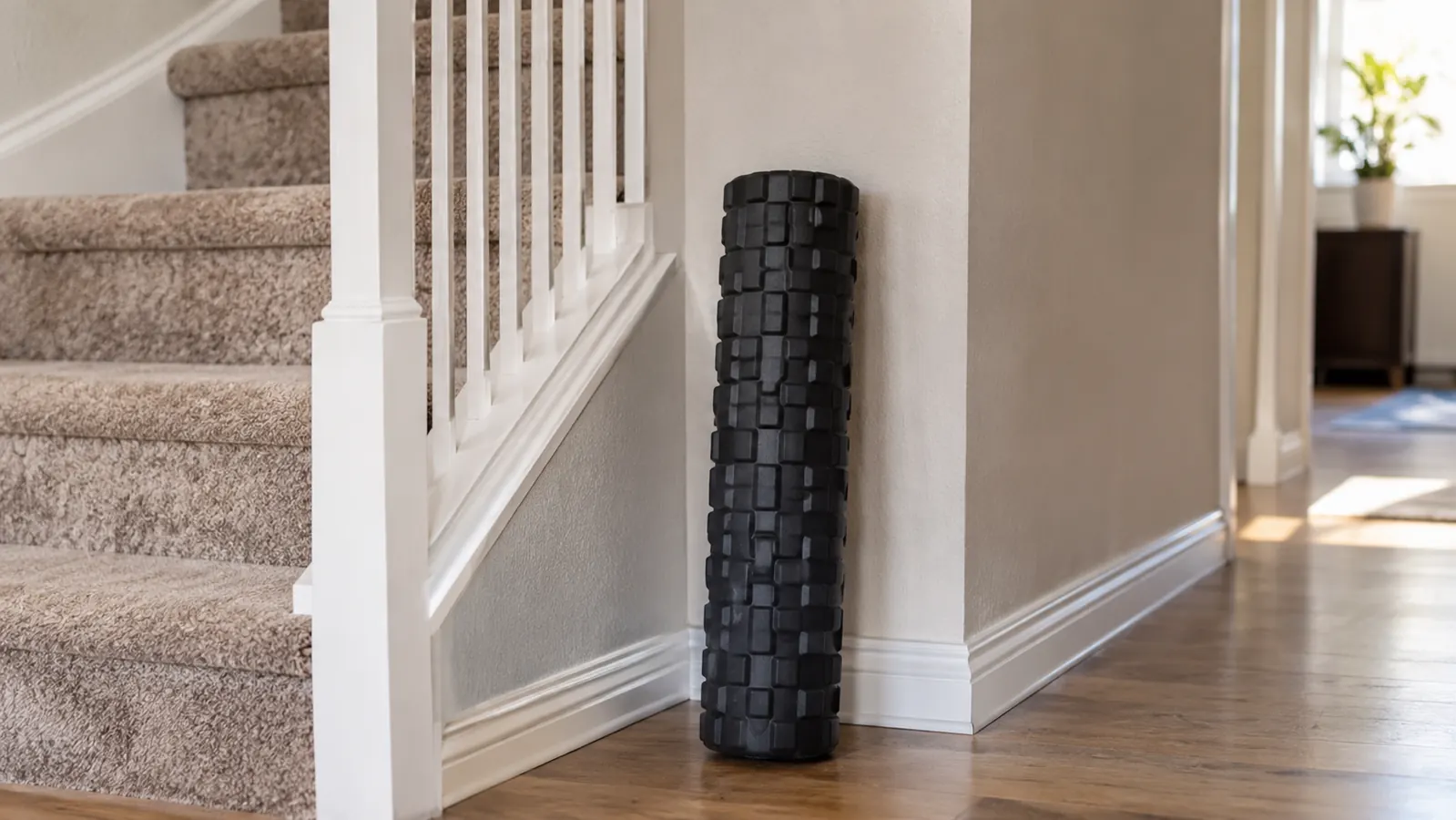
The Grid is not a plain cylinder. It has a three dimensional pattern of ridges and nodules, and TriggerPoint calls the varying density Distrodensity Zones. What that means in practice is the roller feels different depending on where you are on it, firmer in some bands, a little more forgiving in others, so you can hunt for the spot that is complaining instead of mashing everything equally. The foam is listed as extra firm, and it is. This is not a soft pillow roller. Expect it to push back.
At about a pound, it moves rooms with you
It is listed at 1.1 pounds and about 13 inches long, which is small enough to stand in the corner of the living room and light enough that I carry it to the hallway for wall work without thinking about it. It lives next to the couch. When the grandchildren come over, it goes behind the couch. That sounds like a silly reason to like a piece of equipment, but the equipment you actually use is the equipment that is already in the room you are sitting in.
Different parts of the roller suit different tight spots
Some evenings the tight spot is the outside of my right thigh, which I can feel all the way down toward the knee if I have been in the car too long. Other evenings it is the muscle just below the shoulder blade. The varied surface means I use different parts of the same roller for those two jobs: the flatter band for the thigh, where I want broad pressure, and a ridged section for the upper back, where I am looking for something more targeted. One tool, two different feels. That is the whole idea behind the zones.
It saves your thumbs
Before the roller I did a lot of pressing on my own legs with my thumbs and the heel of my hand, which worked for about two minutes and then my hands got tired. This is the plain argument for any roller: your body weight does the pressing and your hands just steer. If you have arthritis in your hands, or you have ever tried to work out a knot in your calf with your knuckles, you will understand why this matters more than any marketing claim on the box.
A few minutes counts, which means you will actually do it
My whole routine is maybe five or six minutes. Calves, the outside of the thighs, the upper back against the wall. I do it most evenings while the news is on, and I do it more reliably than I did the stretching sheets from physical therapy, because there is no sequence to remember and nothing to tick off. Something you will do for four minutes every day beats something perfect you do twice and then abandon. That is not a small thing when the goal is keeping a knee and a back from getting worse.
It works on the muscles that make your back miserable
Lower back tightness does not always start in the lower back. Mine is worse after garden days, and what I notice is that my calves and the sides of my hips are tight too. Rolling those does not fix my back. It does seem to make the whole chain feel less locked, and my back moves easier when the rest of the leg is not pulling on it. My PT explained the mechanics far better than I can, and she suggested the order: legs first, then the back of the hips, then nothing at all on the low spine.
Nothing to charge, plug in, or replace
No cord, no battery, no light blinking at you from across the room. I own enough things that need charging. This is a piece of foam with a surface pattern, and it sits in the corner until I need it. The only maintenance I can think of is not leaving it out on the porch in the sun, and honestly I have not tested that. If you want a gadget that tells you something, this is not it. If you want the thing that will still be in the same corner in five years, that is a point in its favor.
It gives you a job on the bad days
On a bad knee day I am not walking the loop and I am not working in the garden, and the temptation is to sit in the recliner and feel sorry for myself, which does nothing for the stiffness and not much for the mood either. Rolling my calves and the backs of my thighs for a few minutes is a small thing I can still do. It is not treatment. It is something to do that is not nothing. Some days that is the most you can ask of any piece of equipment.
What I'd Skip
Three things. First, skip the urge to roll your lower spine directly. I know people do it and I know it feels good for about ten seconds. My PT told me not to and I have not, and everything I have read since says the same. Second, skip the very firm roller if you have never used one and you bruise easily. This one is extra firm and it does not apologize for it. Do your first few sessions on a softer surface or with a folded towel between you and the roller until you know how your body answers, and stop when it is sharp rather than sore. Third, skip the idea that any of this replaces the exercises your physical therapist gave you. The roller is an add-on. The exercises are the work.
Four minutes on the outside of my right thigh before I put my shoes on, and the first four stairs stop being a negotiation.
Eighteen months in, it is still the first thing I reach for on a stiff morning
TriggerPoint Grid 1.0, extra firm, 13 inches, the multi-density surface my physical therapist handed me in 2025. A few minutes most evenings. Ask your doctor or physical therapist what is right for your knees and back before you start.
Amazon Check Today's Price on Amazon →